No Data Yet
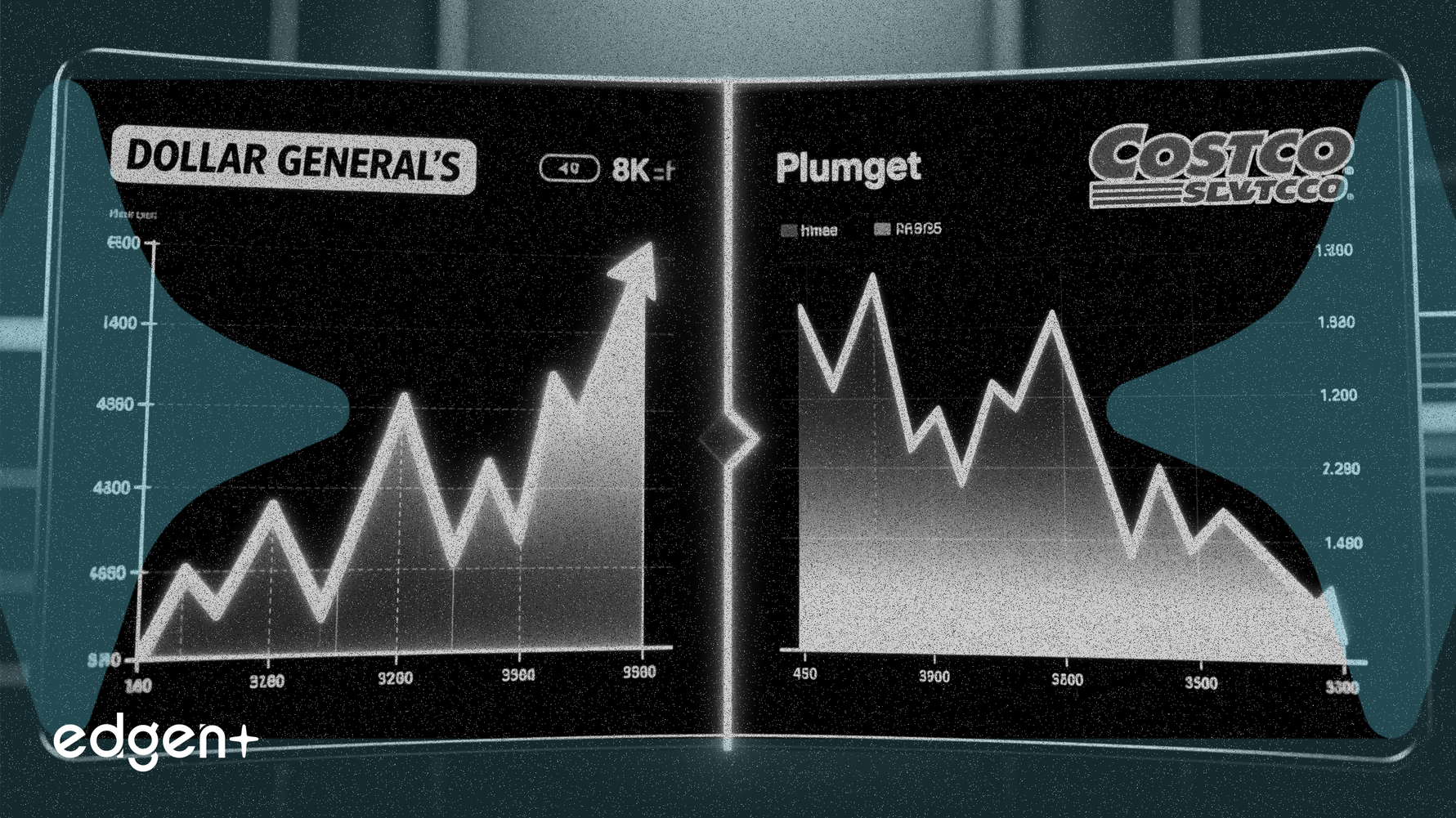
JPMorgan upgraded Dollar General to Overweight with a $166 price target, while Roth Capital downgraded Costco to Sell, cutting its target to $769.
A recent bearish analysis highlights significant risks for GameStop (GME), 8x8 (EGHT), and Dollar General (DG), pointing to weak fundamentals and market volatility. The report uses investor Michael Burry's experience with GameStop as a case study for the disconnect between meme-driven valuation and underlying business health.
A broad sell-off in high-valuation technology stocks triggered a flight to safety, benefiting defensive sectors. Shares of consumer staples company BellRing Brands (BRBR) rose 2.5% as investors sought value and stability amid growing market uncertainty.
The Federal Reserve's third interest rate cut of the year has spurred a rally in consumer discretionary stocks. Analysts are upgrading key players like Las Vegas Sands, citing strong performance metrics and a favorable economic outlook fueled by expectations of increased consumer spending.
Persistent affordability concerns and slowing wage growth are driving a market-wide consumer shift toward private label goods and value-focused retailers, eroding the market share of established name brands.
A new survey from Swiftly reveals that shoppers are increasingly favoring local grocers over national chains. This shift is driven by a combination of deep-seated distrust in large corporations and significant financial pressure from rising grocery prices, creating a pivotal opportunity for local retailers.
Dollar General's stock surged in premarket trading after JPMorgan issued an "Overweight" rating and a $66 price target, citing a strong earnings performance and positive outlook.
TJX Companies has significantly outperformed the retail market, with its stock rising 30.4% year-to-date. The company raised its fiscal 2026 guidance, signaling strong confidence in its off-price business model amid a mixed landscape for competitors.
Costco reported fiscal Q1 2026 results that surpassed revenue and earnings estimates, yet its stock faced pressure due to a minor decline in membership renewal rates and a lofty valuation. The reaction highlights a broader market trend where top-tier retailers like Costco and Walmart are scrutinized for perfection, creating a significant performance gap with struggling peers like Target.
Costco reported Q1 revenue of $67.31 billion, beating expectations. The company reaffirmed plans for aggressive physical expansion and highlighted significant gains from digital enhancements, boosting investor confidence despite minor operational delays.
Leading footwear companies, including Deckers and Nike, reported third-quarter earnings that surpassed analyst expectations, demonstrating resilience in a complex consumer market. However, the positive results are set against a backdrop of significant operational uncertainty, including potential shifts in global manufacturing and mixed signals in consumer spending.
Dollar Tree reported a 4.2% rise in same-store sales, beating earnings expectations as financially-strained consumers, including more affluent shoppers, increasingly prioritize value. This performance aligns with a sector-wide trend benefiting discount retailers.
Kroger reported a net loss of $1.32 billion despite sales of $33.86 billion, prompting a strategic shift in its e-commerce operations. The grocer is moving away from standalone automated centers to a hybrid model utilizing store-based fulfillment and third-party delivery platforms to adapt to a rapidly growing online grocery market.
Projected record holiday sales are set against a backdrop of increasing consumer strain and economic cooling. While headline figures suggest robust spending, a deeper analysis reveals a K-shaped recovery where affluent shoppers drive growth at discount retailers, while lower-income households cut back amid rising debt and a weakening labor market.
U.S. import prices stalled in September, reflecting a deep conflict between falling energy costs and rising prices for other goods. This data complicates the Federal Reserve's path forward as weakening industrial demand clashes with persistent underlying inflation.
The Organisation for Economic Co-operation and Development (OECD) projects slower U.S. economic growth and persistent inflation, driven by trade tariffs. While AI investment may offer a partial cushion, concerns are rising over a potential "stagflation lite" scenario in 2026.
Eurozone retail sales volumes were unexpectedly flat in October, signaling persistent economic headwinds as consumers prioritize savings over spending. This stagnation, particularly in core economies like Germany and France, reflects a broader trend of cautious spending and points to significant downside risks for the final quarter of 2025.
Signet Jewelers' stock fell after the company issued a holiday sales forecast below analyst expectations, signaling consumer spending caution. The negative reaction, despite a third-quarter earnings beat, reflects broader investor anxiety over the retail sector's health amid a volatile economic environment.
American Eagle Outfitters exceeded Q3 earnings expectations and raised its Q4 outlook, driven by strong sales. The performance reflects a broader positive trend among millennial-focused apparel retailers, signaling renewed investor confidence in the sector.
Dollar Tree reported Q3 earnings that surpassed analyst expectations and raised its full-year fiscal 2025 profit forecast. The strong performance is attributed to the successful divestiture of its Family Dollar brand and the strategic implementation of a multi-price point model, which is attracting a wider consumer base.

 Portfolio