No Data Yet
Ford announced a recall of approximately 272,000 U.S. vehicles, including key EV and hybrid models, due to a software defect that could cause the vehicle to roll away.
Ford announces a $19.5 billion charge to pivot away from electric vehicles, while Rivian's CEO criticizes the lack of affordable EV options and plans to launch its $45,000 R2 model.
Ford Motor Company's stock fell 2.63% to $13.31, driven by analyst projections of an 84.62% year-over-year drop in upcoming quarterly earnings.
Global stocks, including the FTSE 100 and S&P 500, declined after reports showed the UK unemployment rate rising to 5.1% and the US unemployment rate jumping to 4.6% in November.
Consumer sector stocks showed mixed performance on Tuesday, December 16, with the Consumer Staples Select Sector SPDR Fund (XLP) falling 0.45% while the Consumer Discretionary Select Sector SPDR Fund (XLY) edged up 0.16%.
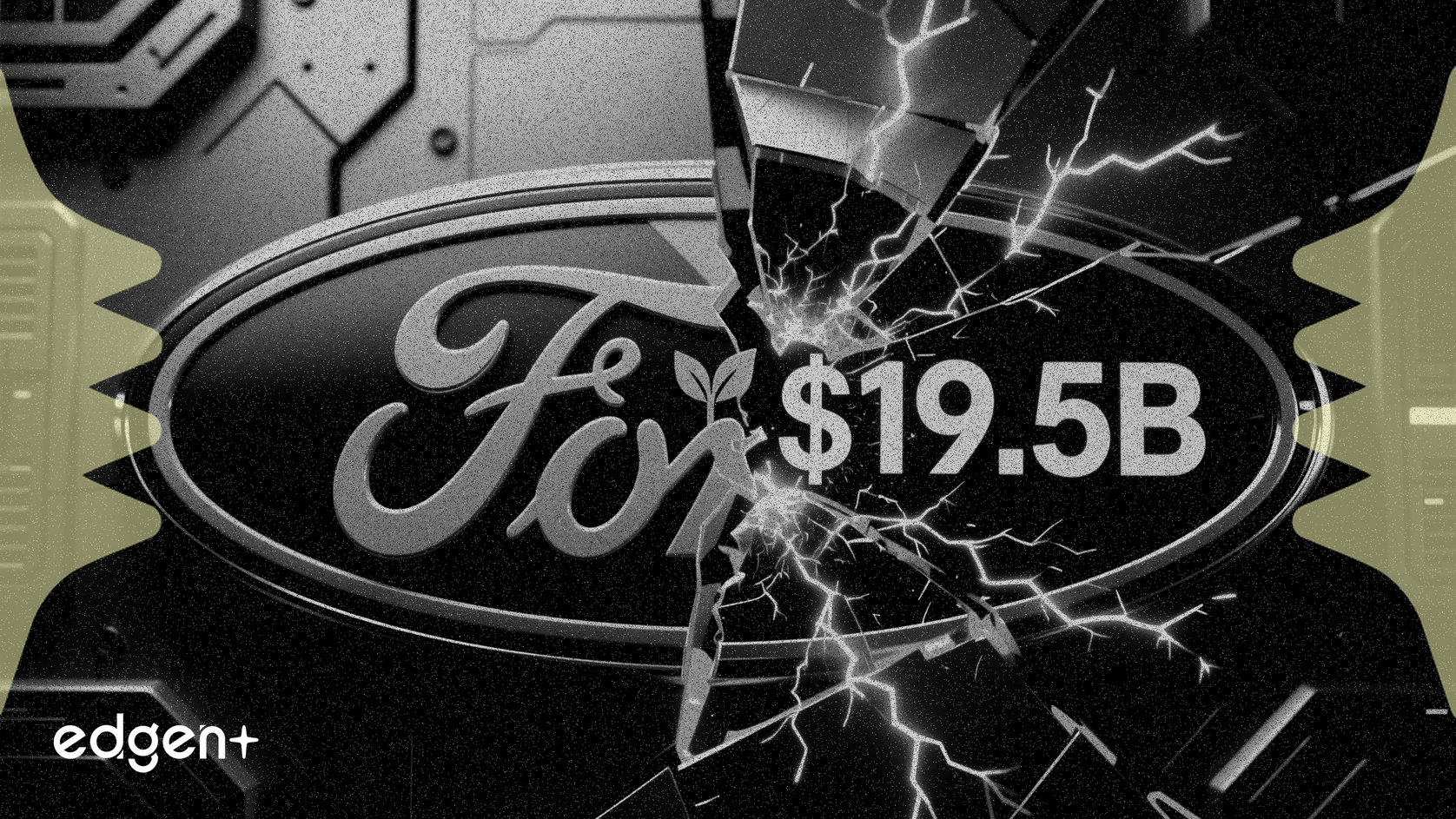
Ford is taking a $19.5 billion charge to scale back its electric vehicle strategy as automakers and regulators, including the European Union, ease off aggressive EV transition timelines.
Ford Motor announced a significant charge for its electric vehicle division on December 16, 2025, as Bitcoin dipped below $86,000, reflecting wider stock market fears of a bubble.
Major automakers, including Ford and General Motors, are expected to announce significant asset write-downs tied to their aggressive investments in the electric vehicle sector.
Ardent Health (ARDT) stock plummeted over 33% following the disclosure of a $97 million accounting adjustment related to revenue and liability reserves. The event has triggered a law firm investigation into whether leadership concealed material weaknesses in internal controls, leading to significant investor losses.
Georgia Power is installing a new natural gas turbine to increase grid capacity. This move highlights the continued reliance on traditional energy sources to meet immediate demand, even as companies like Ford pivot to battery storage and fusion ventures like Thea Energy advance long-term power solutions.
A Tesla owner's reported loss of $750 per month on a Model Y highlights the rapid depreciation challenging the view of electric vehicles as stable investments. This trend is amplified by a broader market slowdown, forcing automakers to reconsider their EV strategies.
DuPont has completed the separation of its electronics division and initiated a $2.0 billion share buyback program. The move aims to streamline operations, enhance shareholder value, and sharpen its focus on high-growth healthcare and water markets.
CenterPoint Energy (CNP) reported strong Q3 earnings but issued cautious 2026 guidance, creating a mixed market signal. The company simultaneously announced a $1 billion increase to its long-term capital investment plan, positioning itself to capitalize on surging energy demand from the technology sector.
Ford Motor Company is executing a significant strategic pivot, recording $19.5 billion in charges to scale back its large all-electric vehicle programs. The company will now prioritize hybrid powertrains, smaller affordable EVs, and a new battery energy storage business targeting industrial demand.
Avnet and AMD are promoting AI and HPC solutions in Australia, reflecting AMD's broader strategy to secure its market position. This initiative occurs as the semiconductor industry faces transformative changes, including 3D chip architectures and custom silicon development by tech giants.
Tesla directors have realized over $3 billion from stock awards, a figure that starkly contrasts with the company's recent performance metrics and raises questions about its corporate governance amid falling sales and shrinking margins.
XPENG reported strong November 2025 electric vehicle delivery growth, contrasting sharply with a significant sales slowdown for Tesla in the U.S. and Europe. The data highlights a fractured global EV market, with robust demand in China but pronounced weakness in North America following key policy changes.
BYD's record-breaking electric vehicle exports are intensifying global competition, creating significant headwinds for rivals including Nio, Xpeng, and even established European brands. This occurs as the North American EV market contracts while Chinese brands gain historic market share in Europe.
Wolfspeed will supply its silicon carbide MOSFETs for Toyota's upcoming battery electric vehicle (BEV) platforms, integrating the components into the onboard charger systems. This strategic partnership aims to enhance the efficiency and reliability of Toyota's EVs while securing a critical supply of high-performance semiconductors.
Ford is partnering with Renault to build affordable electric vehicles on the French automaker's Ampere platform. This strategic shift aims to regain European market share by competing with low-cost Chinese EVs and streamlining production.