No Data Yet
SoundHound AI is expanding its voice AI technology into the healthcare market to compete with Microsoft and IBM, even as its stock has fallen 42.5% over the past year.
Wolters Kluwer's CCH Tagetik platform became the first corporate performance management solution to achieve the IBM Cloud for Financial Services Validated designation on December 17, 2025, reinforcing its security credentials for financial institutions.
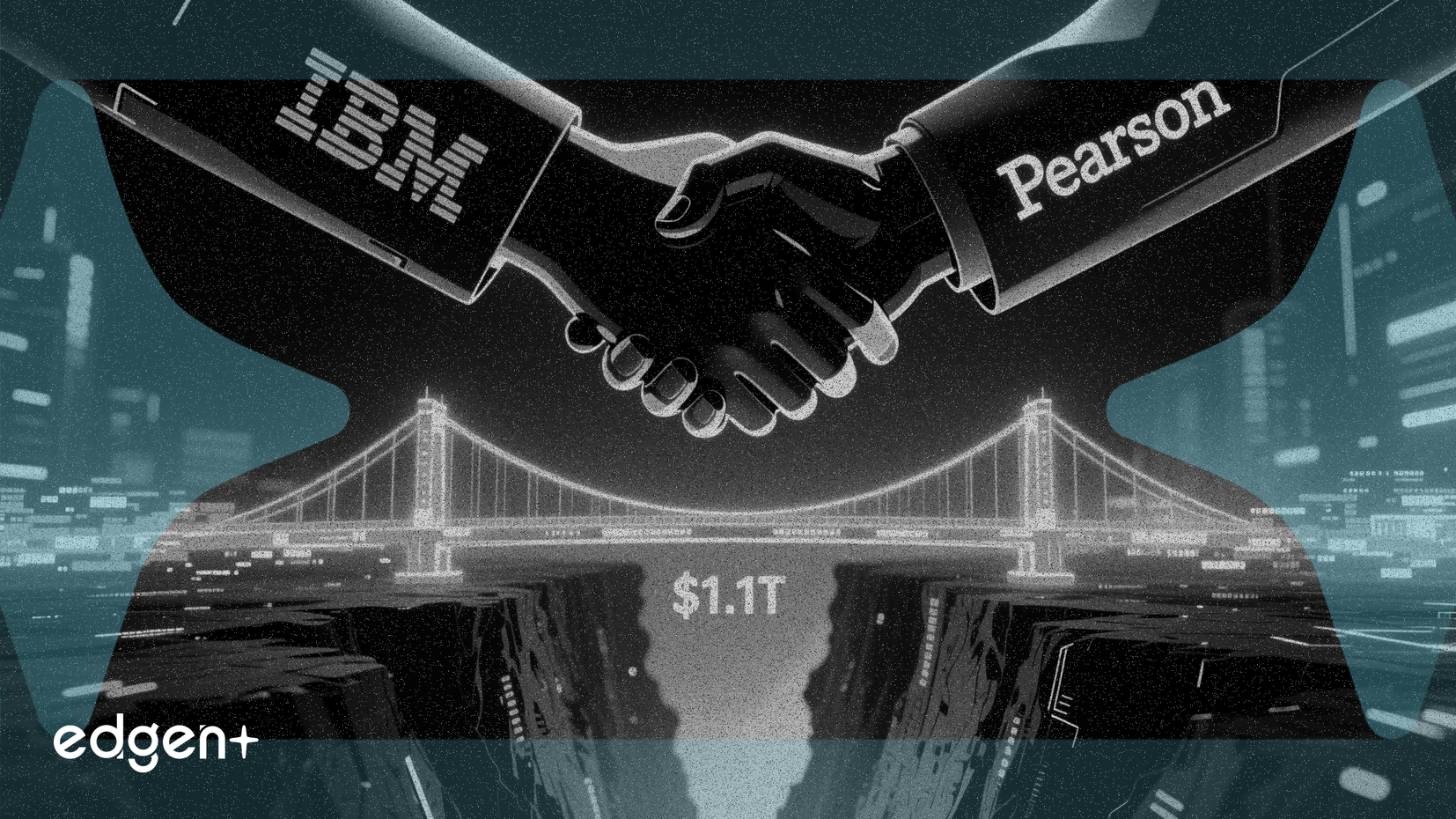
IBM and Pearson announced a partnership on December 11 to build an AI-powered learning platform aimed at closing a skills gap that costs the U.S. economy an estimated $1.1 trillion annually.
An IBM executive stated on December 16, 2025, that AI is reshaping the job market by prioritizing 'power skills' over rote tasks, a trend reflected in IBM's initiative that has upskilled 500,000 people in Saudi Arabia.
Fortune's 2025 'Next to Lead' list identified 25 rising executives, with technology and financial services each contributing six leaders to the list of potential future Fortune 500 CEOs.
On December 16, 2025, digital fraud prevention firm Outseer appointed former IBM executive Shane Cumming as Chief Revenue Officer to expand global sales for its platform, which protects $5 trillion in annual transactions.
IBM (IBM) stock fell 1.78% to $303.18, underperforming the broader market ahead of an earnings report where analysts project 10.46% year-over-year EPS growth.
Kyndryl Holdings (KD) received a "Buy" rating and a $30 price target from Guggenheim following the launch of its AI-powered services for IBM z/OS. The move signals analyst confidence in Kyndryl's strategy to modernize legacy mainframe operations.
Jeff Bezos's recollection of the difficulty in raising Amazon's first $1 million contrasts sharply with the company's subsequent evolution into a dominant force, not just in retail, but in cloud computing through AWS. This strategic pivot demonstrates a powerful model for corporate reinvention.
Recent surveys indicate that corporate AI adoption is not leading to widespread layoffs but is instead reshaping the workforce by creating a significant skills gap. While only a minority of firms are cutting jobs due to AI-driven productivity gains, a larger portion are actively hiring for AI-specific roles, placing pressure on human resources and training infrastructure.
Caterpillar (CAT) and Goldman Sachs (GS) are the top-performing stocks in the Dow Jones Industrial Average for 2025. Their success is driven by strong demand for AI-related infrastructure and a favorable interest rate environment, signaling a potential market rotation from tech to cyclical industries.
POET Technologies received a bullish analyst rating and announced a strategic partnership with Quantum Computing Inc. to develop high-speed optical engines for AI data centers. The move positions POET as a key supplier in the capital-intensive AI infrastructure market.
IonQ announced its technical roadmap, including a 256-qubit system by 2026, but saw its stock decline 4.19% as investors weigh the company's high valuation and intense market competition against its long-term potential.
PNC, a major U.S. bank, will offer direct Bitcoin access to clients, powered by Coinbase's crypto-as-a-service. This move signals growing institutional acceptance of digital assets within the traditional banking framework, potentially unlocking significant capital from mainstream investors.
Quantum computing advancements pose a credible threat to existing cryptographic standards, including those securing Bitcoin, prompting a global race to develop countermeasures. Central banks and governments are now proactively testing and funding post-quantum cryptography (PQC) to secure critical financial infrastructure against future attacks.
International Business Machines (IBM) has announced a definitive agreement to acquire data-streaming pioneer Confluent for $11 billion in cash. The deal is a strategic move to secure the critical "data-in-motion" infrastructure required to power its watsonx AI platform and hybrid cloud offerings.
Duolingo's stock plunged 59% in six months as investors question the company's ability to translate its proclaimed AI strategy into tangible profits, a sentiment reflecting a broader market trend. While the ed-tech firm highlights its AI integration, its performance is being measured against a market that now demands demonstrated financial returns from artificial intelligence, not just potential.
Intel is expanding its hardware-focused AI strategy by increasing chip manufacturing capabilities, while Pinterest is moving into software applications with the acquisition of a connected television (CTV) advertising platform. Both actions reflect distinct approaches to capitalizing on the AI economy.
Bloom Energy's stock fell 17.3% in November, reflecting broader market anxiety over AI-related valuations and profitability. This occurred despite a major partnership, highlighting how negative sentiment is overriding company-specific news as investors demand tangible earnings.
Brookfield and Qatar's sovereign AI company, Qai, have established a $20 billion joint venture to develop artificial intelligence infrastructure. The partnership aims to position Qatar as a prominent AI hub in the Middle East, signaling a major strategic push into the global technology sector.