No Data Yet
S&P 500 companies increased share buybacks by 6.2% to $249.0 billion in Q3 2025, reaching a record $1.020 trillion for the 12 months ending in September.
Spendsafe launched a Mastercard-backed financial education platform in Canada on December 18, 2025, for 8.5 million youth, addressing a market where Gen Z scores only 38% on financial literacy.
Euronet won a Mastercard Excellence award after launching a commercial credit program in approximately two months, a timeline enabled by its acquisition of CoreCard.
Everygame Casino announced on December 17, 2025, that it has integrated new payment providers, including Visa and Mastercard, to offer instant withdrawal options for its users.
Stablecoin monthly adjusted transaction volume reached $1.5 trillion by October 2025, surpassing major payment networks like PayPal as total supply grew to over $304 billion.
Mastercard grew its payment acceptance network in Africa by 45% in 2025, expanding its push into the continent's growing digital economy.
A Mastercard-backed program in Poland helped women-led small businesses adopt digital tools, resulting in 49% of participants increasing their customer base.
On December 16, 2025, Mastercard and LoanPro announced a partnership to launch 'Loan on Card' in 2026, a solution enabling lenders to disburse installment loans instantly to borrowers via the Mastercard network.
Market analysis for 2026 indicates a strategic shift away from uniform mega-cap tech growth toward cyclical sectors and high-yield dividend stocks, as demonstrated by strong corporate performance and expert forecasts.
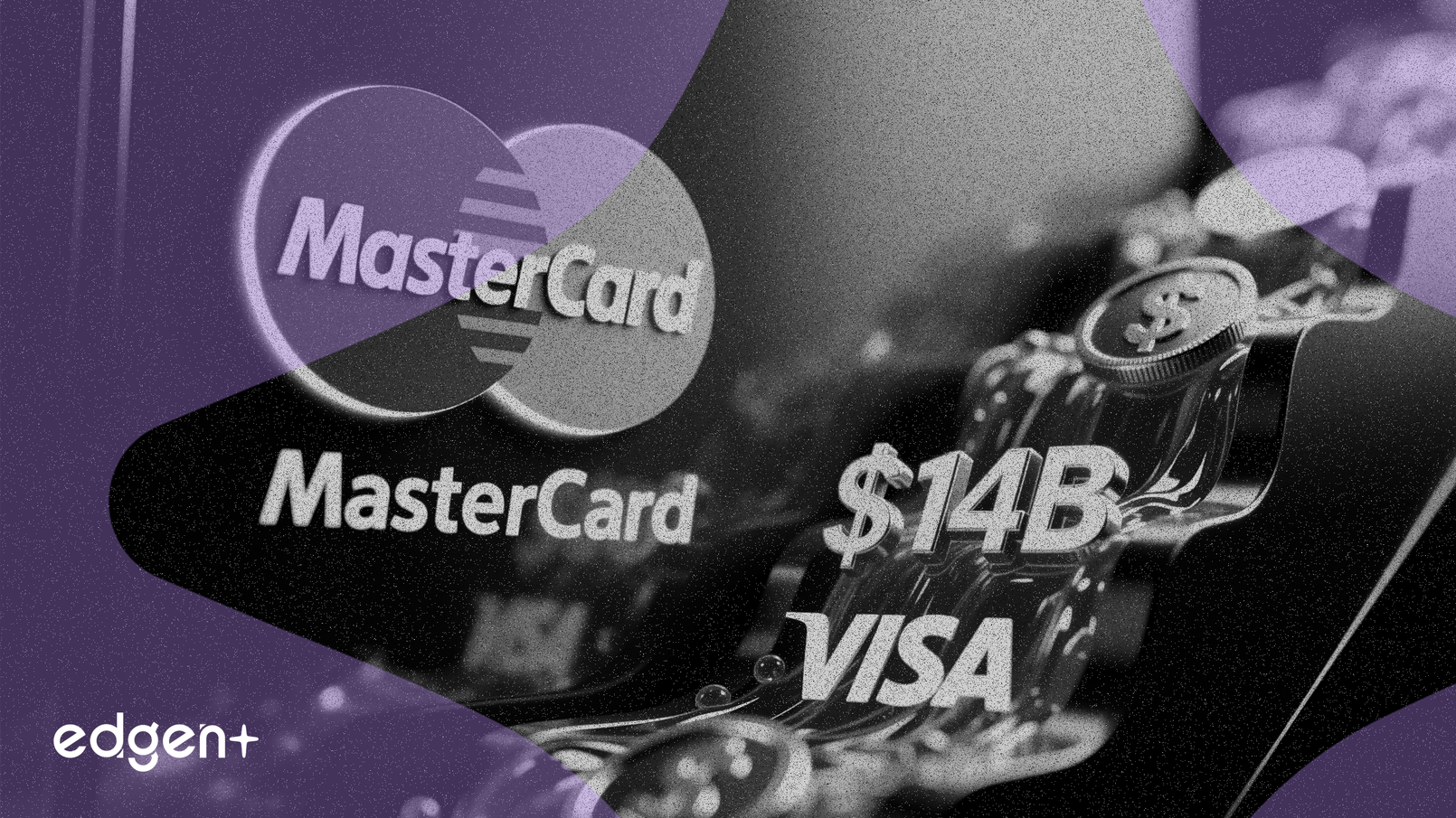
Mastercard has announced a $14 billion share buyback and a 14% dividend hike, closely following a similar capital return strategy by its chief competitor, Visa. The move underscores a broader trend among established payment networks to reward shareholders while navigating digital innovation and significant regulatory pressures.
HSBC upgraded Mastercard (MA) to a "Buy" rating, increasing its price target to $633. The revision signals renewed analyst confidence, citing the stock's recent underperformance and strong growth in value-added services as key drivers for a positive re-rating.
Mastercard has acquired a 2.3% stake in B2B payments firm Corpay, signaling a strategic move to deepen its presence in the corporate payments and automation market. The investment aims to counter the influence of integrated fintech platforms and leverage Corpay's established B2B solutions.
A Mastercard-led initiative successfully onboarded 25,000 rural Indian women onto digital commerce and banking platforms, demonstrating a scalable model for financial inclusion. The project highlights a growing trend of leveraging technology to empower micro-enterprises in emerging economies.
Chipotle Mexican Grill marks its 4,000th store opening with its CEO ringing the NYSE bell, highlighting its strong growth trajectory amid a broader market rotation away from high-valuation technology stocks.
UK consumer data shows a clear shift from traditional credit cards to Buy Now, Pay Later (BNPL) services. This trend is creating new revenue streams for fintech but also signals rising consumer debt and potential default risks.
The Visa Foundation has appointed Najada Kumbuli, a former Investment Director at Calvert Impact Capital, as its new President. This move signals a strategic focus on gender-smart and inclusive investing, aligning with broader financial industry trends.
Mastercard and cross-border payments provider UniTeller are launching the uLink Card, a prepaid debit solution aimed at capturing a share of the global remittance market by offering fee-free international money transfers and promoting financial inclusion for underserved communities.
Mastercard and TerraPay have partnered to allow customers of TerraPay's digital wallet partners to make payments at Mastercard's 150 million+ acceptance points worldwide, a significant move towards greater payment interoperability.
U.S. household debt has surged to a record $18.6 trillion, fueled by a $1.2 trillion credit card balance and algorithm-driven credit increases. This leverage contrasts sharply with the record $52 trillion in wealth held by the top 1%, creating a stark economic divergence that threatens consumer stability and broad market health.